Formulation and medicinal chemistry processes
Identify the right scientific capability and discuss feasibility with the Carnot team.
Offer overview
What this offer helps you achieve
Identify the right scientific capability and discuss feasibility with the Carnot team.
Scientific and technical scope
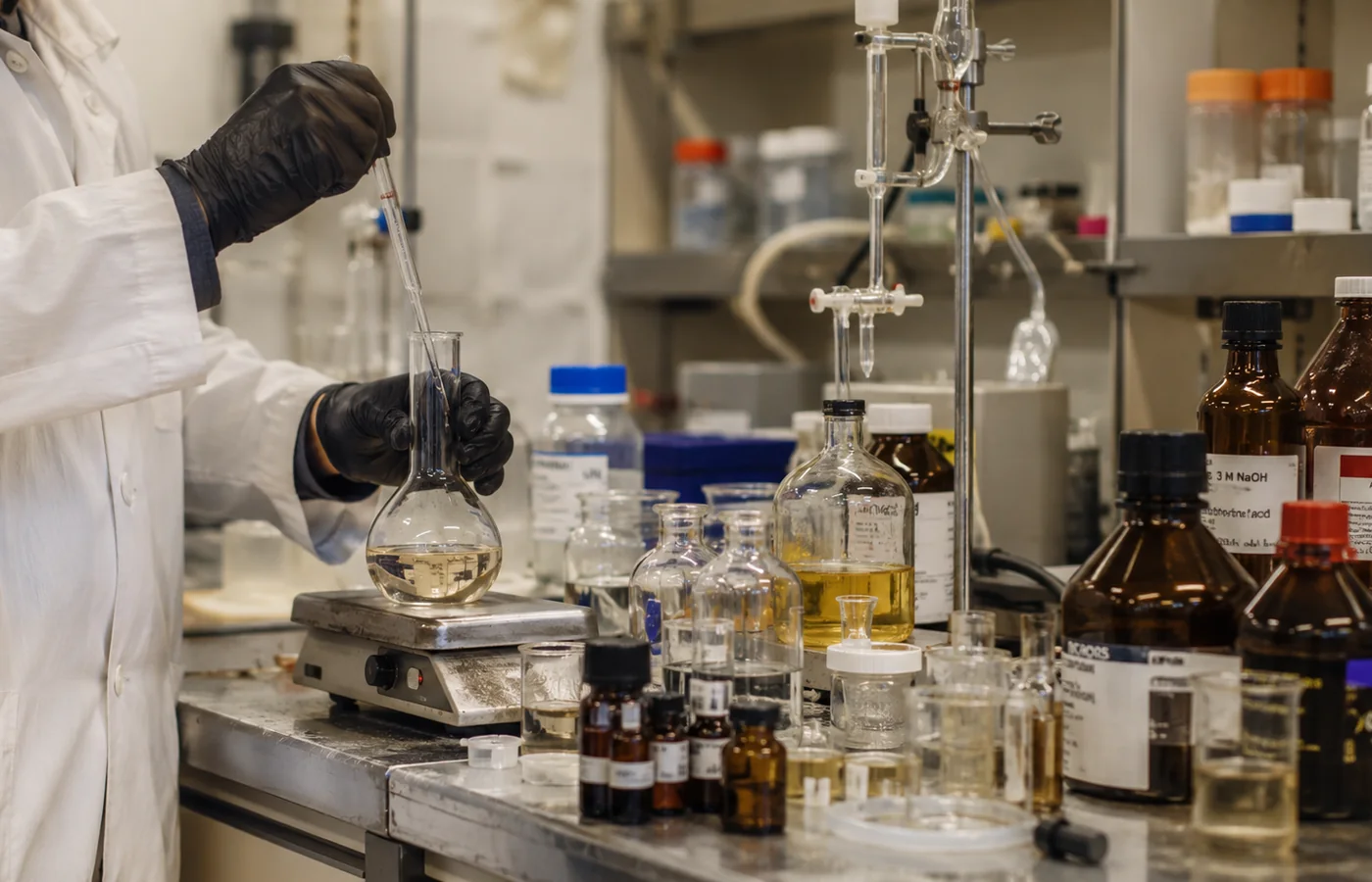
I2C develops innovative galenic formulations, passive and active nanovectors, encapsulation systems, drugability assays and in vitro tests. It also supports medicinal chemistry, chemoinformatics, screening, lead repositioning and continuous-flow processes from synthesis to production and purification.
Capabilities mobilised
Formulation and synthesis
Application fields
All fields
Use case: API-FLOW-CRIST: continuous-flow synthesis and crystallization of ibuprofen
CARMeN and SMS laboratories at Carnot i2C demonstrated the feasibility of coupling continuous-flow synthesis and crystallization of ibuprofen and its sodium salt, Na-Ibu, to optimize and intensify pharmaceutical processes.
Three synthesis steps — Friedel–Crafts acylation, 1,2-aryl rearrangement and saponification — achieved a 55% overall yield. Challenges included reaction-medium corrosiveness and by-product formation.
Taylor–Couette crystallization reached 1.6 g/h for Na-Ibu and 4.68 g/h for commercial ibuprofen in heptane. Ibuprofen obtained from continuous-flow synthesis yielded pure crystals at up to 1.74 g/h, with a 40% crystallization yield.
Discuss this offer
Could this capability strengthen your R&D programme?
Present your scientific, technical or clinical need and identify the most relevant route to collaboration.
Continue exploring
Related expertise for your programme
Offers selected through shared capabilities, application fields or institute expertise.